
HEX-VISION
Realtime object segmentation and tracking with a control-focused UI. Built around screen capture, YOLOv8 segmentation, and telemetry visuals for robotics-style workflows. Built as an automation pipeline for the redHEX hexapod robot.
dorianborian/hex-visonYOLOv8 vision and control scriptsView repository
Overview
For two years, my hexapod robot, Red Hex, was essentially a high-tech paperweight. Based on the Chica Hexopod open-source project, it’s a beast of a machine: six legs, 18 high-torque motors, and a complex gait system. But despite its mechanical prowess, it was “dumb.” It could move, but it couldn’t see.
The goal of Project Hex-Vision was to transform this dormant machine into an autonomous predator capable of identifying, tracking, and chasing humans. This was achieved through a unique integration of 3D scanning technology and machine learning.
Camera hardware
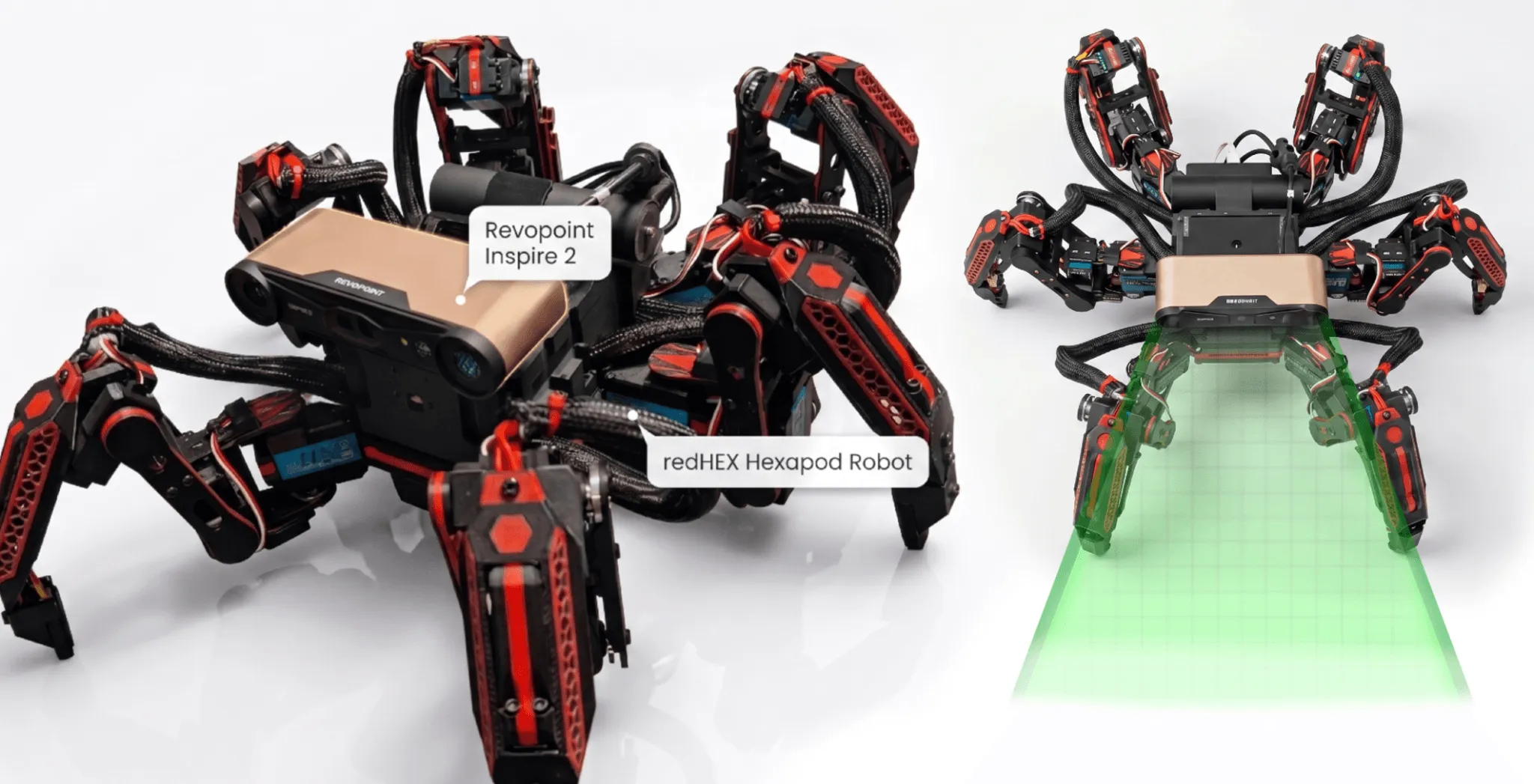
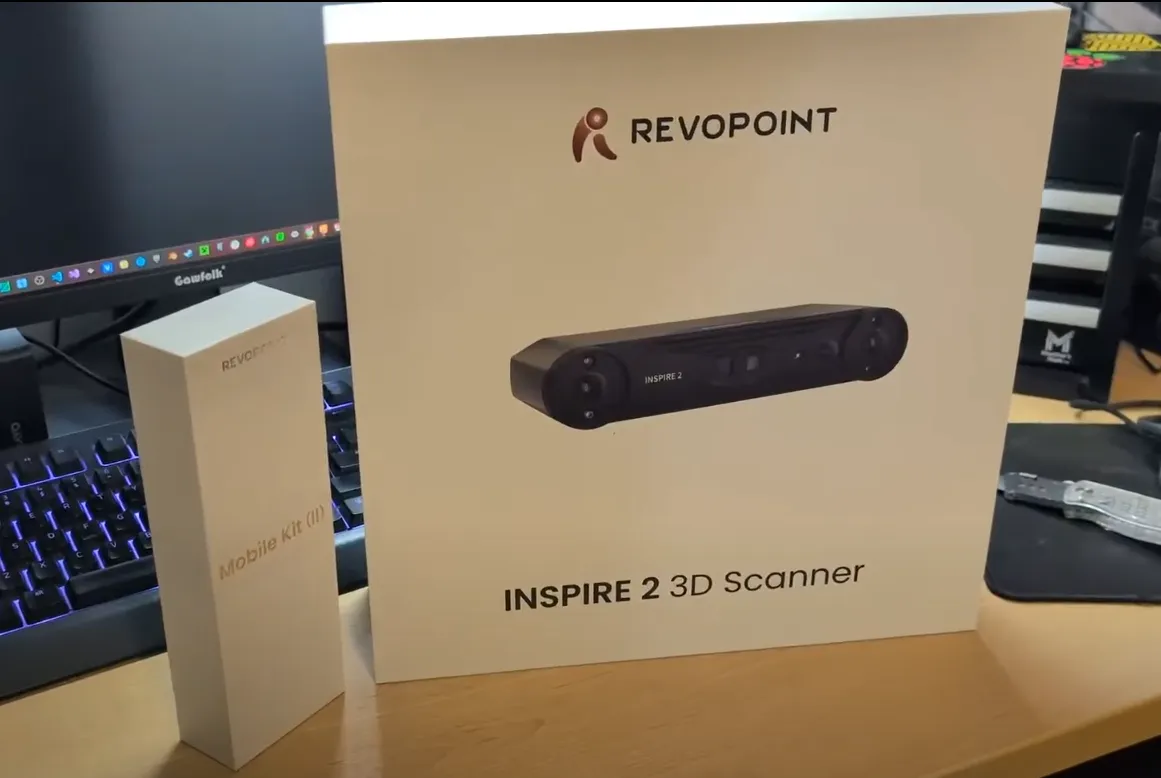
The catalyst for this project was the Revopoint Inspire 2. While traditionally marketed as a high-precision 3D scanner for engineering, I saw a different utility for it. It is a lightweight, dual-feed sensor capable of providing both RGB and Depth data.
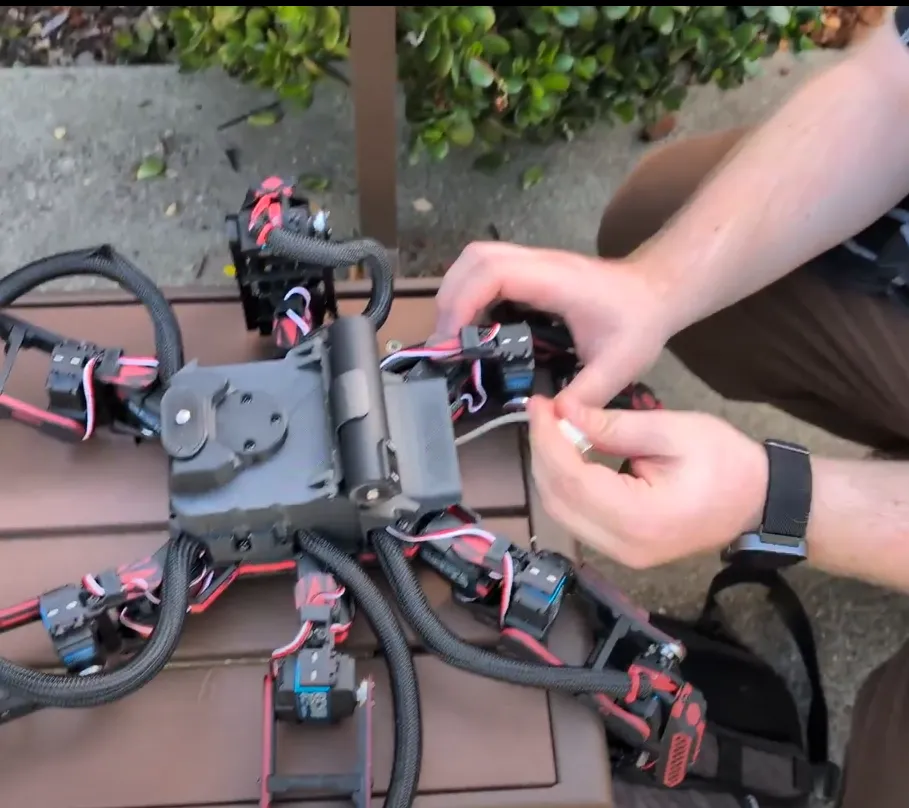
To integrate the scanner, I had to overhaul the physical structure of the robot. After years of wear, several components had developed fatigue. I 3D-printed reinforced replacement parts and designed a custom 1/4-20 mounting system to secure the scanner to the head of the hexapod. This gave the robot a stabilized, high-resolution vantage point.
Software architecture
The core challenge of this project was not just detection. It was control. I needed a way to bridge the gap between high-level AI vision and the low-level motor kinematics that keep a hexapod balanced.
The vision pipeline
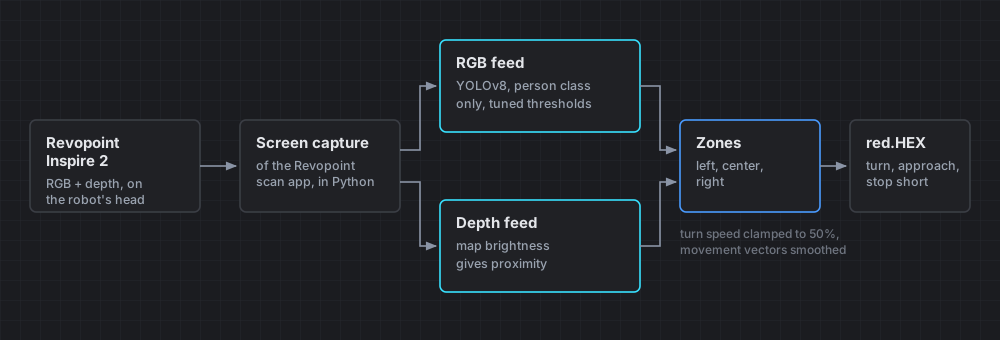
The software stack is built in Python, using OpenCV and the YOLOv8 model. Instead of tapping into the hardware at a driver level, I used a high-speed screen-capture method. The program monitors the Revopoint scan app output in real time.
Left, center and right zones
The program divides the visual field into three distinct zones: Left, Center, and Right.
-
RGB Feed: YOLOv8 identifies the “person” class within these zones.
-
Depth Feed: The system analyzes the brightness of the depth map to calculate proximity.
By combining these, the robot knows exactly where a person is in 3D space relative to its own chassis.
Engineering challenges
The transition from theory to autonomy was fraught with traditional robotics hurdles.
-
The Overcorrection Problem: In early tests, the robot suffered from massive “hunting.” It would turn toward a person, overshoot due to momentum, and lose the target. I solved this by clamping the maximum turn speed to 50 percent and implementing a smoothing filter on the movement vectors to dampen sudden spikes in data.
-
False Positives: Early versions of the model were prone to identifying inanimate objects like refrigerators as human threats. I refined the confidence thresholds and restricted the YOLO model to prioritize person detections only.
-
Mechanical Resilience: To test the limits of the chassis, I took Red Hex to a skating rink for a side project called Robots on Ice. The experiment proved that the six-legged design is inherently superior for low-friction environments. It maintained balance where bipeds would have failed.
Results
After weeks of debugging the feedback loops and optimizing the Python engine, the result was a robot that felt truly alive. In the final field tests, Red Hex demonstrated the ability to scan and acquire a target, maintain its stance in real-time, and close the distance while stopping at a predetermined safety threshold.
Project Hex-Vision serves as a case study in hacking existing hardware to achieve advanced autonomy. By combining consumer 3D scanning tech with modern AI models, we can turn static machines into reactive, intelligent agents.
Watch the video
See it in action, along with the engineering process, in the full video.
Resources
- Base robot: Chica hexapod by Make Your Pet
- Scanner: Revopoint Inspire 2